Category Archives: Mineral & Royalty Interests

Behind the Scenes: How Mineral Vault Sources and Evaluates Oil & Gas Properties

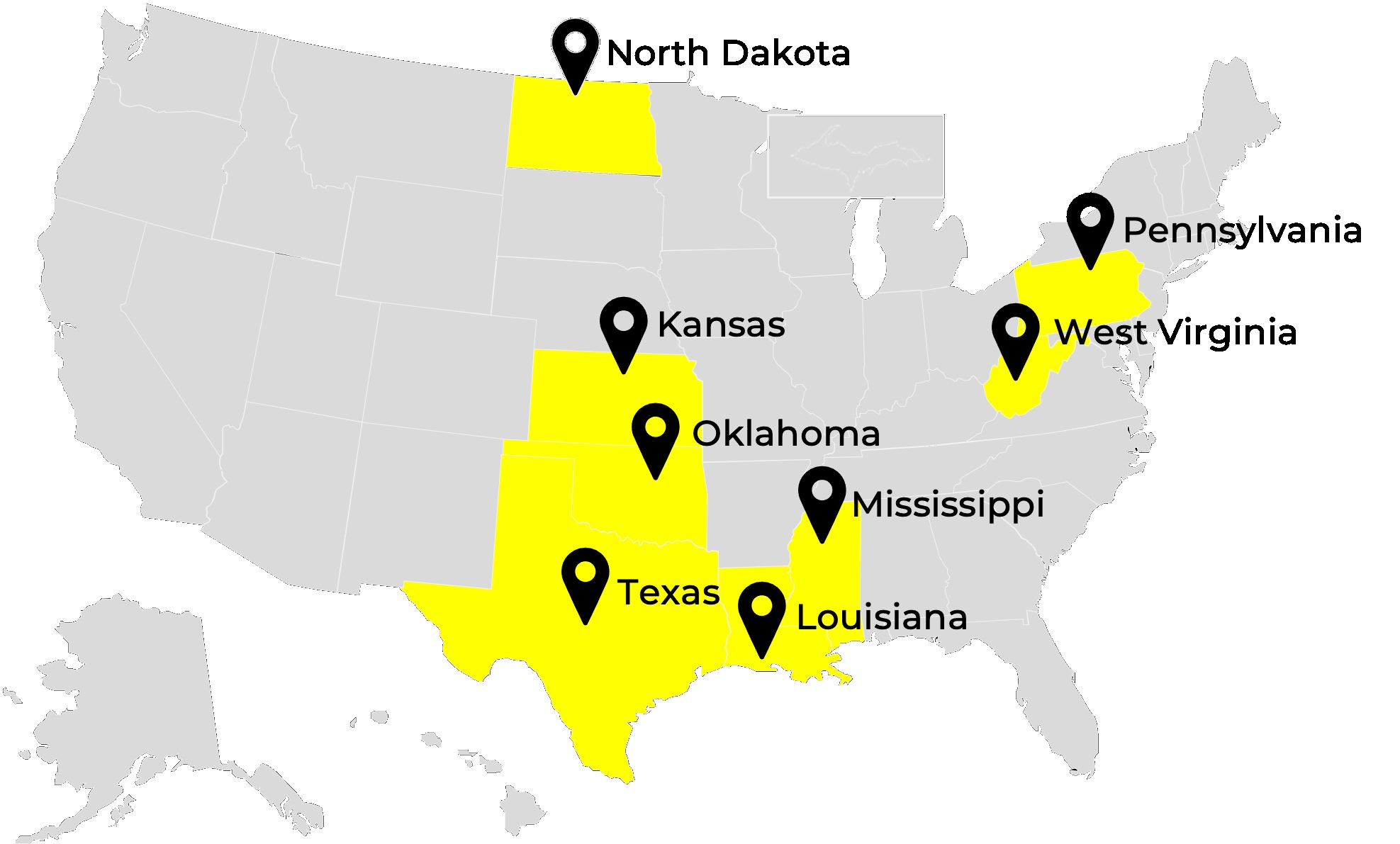
When investors look at Mineral Vault I, what they see is a diversified portfolio of mineral and royalty interests spanning more than 10,000 gross acres and 2,500 producing wells across 9 different U.S. states. What they don’t see, however, is the extensive work that went into creating this portfolio — years of research, negotiation, and due diligence that transformed scattered mineral rights into one of the first tokenized funds of its kind.

Closing 350 Transactions Across 9 States

Every property in Mineral Vault I was acquired between May 2020 and May 2023 by Allegiance Oil & Gas (the oil & gas investment company behind Mineral Vault).  This was a period that included volatile oil prices, shifting operator activity, and post-pandemic energy market dynamics.  Over those three years, Allegiance completed 350 individual transactions with mineral and royalty owners across the U.S.

These weren’t bulk acquisitions from a single seller, group of sellers, or brokers.  Every single counterparty was different!  The process required direct negotiation with landowners, estates, and family trusts. In many cases, ownership was fragmented among dozens of heirs, each holding only a fractional interest, and in many transactions curative title was required before the transaction could be finalized.

This painstaking, property-by-property approach created several advantages:

Better pricing control – By avoiding auction environments and brokers, Allegiance could acquire assets at fair market value without paying speculative premiums.

Higher quality assets – With direct relationships, the team could be selective, targeting only properties that met strict evaluation criteria.

Diverse sources – Hundreds of transactions meant exposure to thousands of acres and wells, helping build a portfolio resilient to market swings.

Title resilience – By painstakingly curing title for every property, one at a time, Allegiance was able to close acquisitions with title so clean that they’ve agreed to offer a title guarantee to token holders for all properties in Mineral Vault I – eliminating one of the biggest risks in traditional mineral rights investment.

What Makes a Property Attractive?

Not all mineral interests are created equal. Before becoming part of the Mineral Vault I portfolio, each property was screened using a multi-factor evaluation process designed to balance current production with future upside.

Key criteria included:

Production Track Record – Priority was given to properties with active wells already generating monthly cash flow. This provided immediate yield stability.

Diverse Basin Geography – Holdings were intentionally spread across numerous top U.S. shale plays in completely different geographic areas, including the Permian, Eagle Ford, Bakken, Haynesville, and Barnett, to reduce concentration risk.

Operator Quality – Emphasis was placed on established E&P companies with proven operating track records.  And with more than 150 operators represented in the portfolio, operator concentration risk was also greatly mitigated.

Future Development Potential – Properties with additional, undeveloped acreage offered the possibility of new wells, providing natural growth in cash flow and reserve replacement as existing wells deplete.

Commodity Mix – Balancing properties with primarily oil vs. primarily natural gas exposure ensured the portfolio could benefit across numerous, different commodity cycles.

Together, these criteria created a portfolio that wasn’t just cash-flowing today, but also positioned to capture future drilling, leasing, and development opportunities.

Why This Matters for Investors

The value of this disciplined acquisition strategy for investors comes through in three ways: Scale and diversification, stable yield, and upside potential.

The value that scale and diversification hold is that exposure to thousands of wells across multiple states reduces reliance on any single operator, basin or commodity. Stable yield provides value in early dividend reports that confirm steady, monthly royalties from producing properties. Finally, the upside potential value proves vital when new drilling occurs in active basins like the Permian and Eagle Ford, as this unlocks new cash flow streams for investors that partially offset the depletion from existing well production – without requiring new capital from investors.

Importantly, all of this groundwork was done *before* tokenization. Investors entering Mineral Vault I aren’t speculating on future acquisitions. They are stepping into a portfolio that is already diversified, cash-flowing, and de-risked.

From Groundwork to Tokenization

The heavy lifting; from negotiating 350 transactions and verifying title across thousands of wells, to assembling properties across 9 states, was complete before the first token was issued.

By placing this portfolio on-chain, Mineral Vault makes an asset class once limited to insiders available to investors around the world. Investors aren’t just buying exposure to oil and gas properties, they’re accessing an asset backed by years of acquisition expertise, made liquid through blockchain infrastructure. Tokens bring efficiency, transparency, and liquidity to an industry that historically required significant capital and private connections.

Behind every digital token is a real, tangible asset. In the case of Mineral Vault I, those assets were carefully sourced, one deal at a time, by a team with decades of oil and gas experience.

That’s what makes Mineral Vault different:

A portfolio built on solid ground.

Engineered for yield today and upside tomorrow.

Made accessible to investors everywhere through tokenization.

Inside Mineral Vault I: What Our First Dividend Reports Tell Us

When Mineral Vault launched its first tokenized offering earlier this year, we set out to prove two things:

  1. That U.S. mineral and royalty interests are one of the most resilient, income-producing asset classes available.
  2. That blockchain-based tokenization can open these historically exclusive investments to a far broader investor base.

With three months of dividends paid and the corresponding reports now published publicly, we can step back and ask: what do the numbers tell us about the portfolio, the underlying assets, and the tokenized investment model itself?

A Snapshot of Mineral Vault I’s Performance To Date

All dividend reports are published at links given publicly on our Transparency Portal, giving token holders a full view of gross revenues, expenses, and distributions.

Dividend Report #1 – June 2025

  • Gross Revenue: $115,516.54
  • Net Revenue: $114,999.55
  • Dividends Paid: $103,499.60
  • Implied Pre-Tax Yield (annualized): ~12.42%

Dividend Report #2 – July 2025

  • Gross Revenue: $158,680.82
  • Net Revenue: $154,349.06
  • Dividends Paid: $138,914.15
  • Implied Pre-Tax Yield (annualized): ~16.67%

Dividend Report #3 – August 2025

  • Gross Revenue: $123,640.08
  • Net Revenue: $123,475.87
  • Dividends Paid (Total): $111,128.28
  • Implied Pre-Tax Yield (annualized): ~13.34%

The pattern is clear: revenue is strong, dividend distributions are healthy, and returns are well in excess of initial targets.

What the Results Show

Looking at these first three months altogether, there are three main themes to be observed:

  • Stable Cash Flow – The producing mineral and royalty interests inside the portfolio are delivering consistent distributions, validating the reliability of the underlying asset class.
  • Attractive Yields – With double-digit annualized pre-tax returns each month, Mineral Vault I is providing the kind of income that historically attracted institutional investors to minerals.  Due to the nature of the asset class, these aggressive returns are simultaneously acting as a hedge against inflation and public market volatility.
  • Tokenization in Action – The reports also demonstrate how blockchain simplifies a once complex process. Ownership, dividend tracking, and distributions are being handled seamlessly, without the paperwork or delays that often characterize traditional mineral ownership.

A Primer for Newcomers

Here are some key concepts that are useful to know if you are new to mineral interest investing or tokenized assets in general. We also have a handy FAQ page for more in-depth questions.

What are mineral interests?
In the U.S., mineral rights allow the owner to benefit from subsurface oil and gas production. When operators drill and produce hydrocarbons, mineral owners receive royalty payments.

Why are they attractive?
Mineral ownership is passive. Owners do not fund drilling, manage operations, or take on debt. Instead, they receive income streams tied directly to production. This makes minerals different from other investments in oil & gas.

How does tokenization work?
Mineral Vault I Ltd, a BVI-registered entity, holds the portfolio. Ownership is represented through $MNRL security tokens. Each token corresponds to a proportional share of the entity’s revenue, with dividends paid out accordingly.

Why emphasize transparency?
The mineral industry has historically been opaque. By publishing property-level information, check-level revenue, and monthly dividend reports, Mineral Vault sets a higher standard for visibility and accountability.

Numbers in Context

While the three reports are encouraging, it is worth remembering that mineral revenues naturally vary month to month. Commodity prices, operator decisions, and production volumes can all influence distributions.

That said, the data illustrate the advantages of diversification. Mineral Vault I includes interests in more than 2,500 producing wells across nine U.S. states. This breadth helps smooth out volatility from any single operator or basin.

Another point of context is taxation. The August report shows both pre-tax and post-tax yields, illustrating how U.S. source withholding impacts foreign investors. By reporting these figures clearly, we help investors understand net returns – not just headline numbers.

Mineral Vault I is the foundation of a longer-term vision: to bring mineral and royalty ownership into a more transparent, accessible, and scalable format. With Mineral Vault II in development, more properties and more investors will soon be part of this ecosystem.

The early results confirm that tokenization is not just theoretical. It is producing real, tangible returns, delivered monthly, with data shared openly. Each report strengthens the case for minerals as a stable asset class and for blockchain as a practical tool in energy finance.

Further Reading

All three dividend reports and supporting data are available publicly at links given on our Transparency page.  For convenience, here are links to the first three months of data:

The first three dividend reports for Mineral Vault I demonstrate a simple truth: mineral rights, when packaged transparently and managed via blockchain, can provide investors with stable cash flow, attractive returns, and clear reporting.

For investors new to the space, these reports offer more than just numbers – they are proof that tokenized minerals can work in practice, not just in theory. For existing token holders, they reaffirm the value of a model built on openness and sustainability.

As the Mineral Vault platform grows, this foundation of transparent reporting will remain central. In a market that too often operates behind closed doors, we believe visibility is the strongest foundation for long-term trust and growth.

What’s Involved In Managing Mineral Properties?

In the oil & gas industry, mineral property management companies are often hired to manage large mineral property portfolios. Property management companies are often paid a fixed percentage of royalty revenue as a management fee, which compensates the property manager for their effort & expenses in managing the properties.

In this article, we’ll explain the management responsibilities of these mineral property management companies.  Let’s jump in!


Negotiation & Execution of New Oil & Gas Leases

A cornerstone of mineral property management is the securing of new oil & gas leases on unleased portfolio acreage.  A good mineral property management company will not only negotiate and execute these leases in a favorable manner for their client, but they will also actively market unleased acreage to exploration & production (E&P) companies which may be interested to lease the acreage.

So what exactly is an oil & gas “lease”?

Before an oil & gas E&P company can drill wells on any acreage, they must first secure permission from the mineral interest owner(s) to do so.  This “permission” comes in the form of an oil & gas lease.

The process typically begins with the E&P company selecting a tract of land where they believe there is potential for drilling a lucrative well.

After an area has been chosen, public records are checked to determine what portions of the acreage are leased or open as well as who the record owners are of the mineral interests in question.

Once the open acreage & ownership has been determined, the E&P company will present an offer to the mineral owners to lease their mineral interests for a set period of time (typically, 2 to 5 years) at a specified price per acre. This payment is called the “lease bonus” and is payable regardless of whether the E&P company actually drills any wells during the lease term. The lease will also specify a royalty percentage (typically between 12.5% and 25%), which is the percentage of net proceeds from the sale of produced oil, gas, or other hydrocarbons to which the mineral owner will be entitled, should one or more wells be drilled during the lease term. Once the offer to lease is accepted, the mineral owner is sent a lease form and an order for payment.

It is important to understand that the mineral owner(s) receive the payments mentioned above since they own the mineral interests being developed, but they are not responsible for any of the costs of drilling or operating the wells – this expense (and risk) falls firmly on the E&P company.


Mineral property managers also manage the division and transfer order processes for all of their clients’ new and existing wells.

Division orders are contracts between the well operators (E&P companies) and mineral owners which are executed immediately after a well is drilled and set to begin producing. To receive royalty payments, mineral owners must execute the associated Division Order for the well(s) which have been drilled.  The Division Order states clearly the final percentage of revenue from the wells which will be due & payable to the mineral owner and is executed for avoidance of doubt and to diffuse objections down the road.

It is critical that a mineral property management company review these division orders very carefully to ensure the accuracy of essential information like the effective date of production, the payor’s name and address, the well name and legal description, tax identification numbers, and, most importantly, the decimal interest (percentage) which the mineral owner will be paid on.

Another document which is occasionally relevant to mineral property managers is transfer orders – these documents are sent by operators when a particular property’s ownership changes. If a property with an already-existing well or wells (for which the mineral owner(s) are actively receiving royalty payments) is transferred from one mineral owner to another due to purchase, inheritance, or any other reason, transfer orders are issued to one or both parties to acknowledge the transfer and ensure that all parties agree to the change.


Verification of Payments from Operators & Purchasers

A good mineral property manager will review all lease bonus, royalty, and other payments received to ensure that they are accurate and in compliance with the executed lease terms.

In a more basic sense, they will also ensure that all payments to which their clients are entitled are actually received, as checks can very easily get “lost in the mail” when dealing with large mineral property portfolios. It is not uncommon for a single portfolio to receive several hundred or thousands of revenue checks per month, being issued by various parties. In managing a portfolio of this scale, simply ensuring all payments are received is critical.

Lastly, on an ongoing basis, a good property manager will ensure that payment is being received on all wells that cross portfolio acreage using specialized software to map the locations of all existing wells against owned acreage to ensure that division orders and ongoing royalty payments are being received from all overlapping wells. If wells are discovered to exist which the client is found to *not* be in-pay on, a good property manager will reach out to the operator of the well in question and ensure ownership information is corrected in their systems and payments are issued as required.


Verification & Payment of Property Taxes

When managing large mineral property portfolios, one of the most critical management responsibilities is the assurance that all due property taxes are paid on all owned acreage.

In most states, at the time of acquiring a new mineral interest, the new owner must inform the tax authority that the ownership of the property has transferred and provide their contact information. After that, each year, the tax authority will appraise the property in question and property tax statements will be sent by the tax authority to the owner in question, which must be verified against owned acreage and paid promptly to avoid penalty & interest charges – or contested if the appraised value is unreasonable or inaccurate.

When managing a large mineral property portfolio, among the most critical steps in this process is simply verifying that tax statements have been received and paid on all owned interests.  Why does this matter so much?  Well, if property tax payments aren’t received by the tax authority in question, even if they have the owner’s address incorrect or they are sending the statements to the previous (incorrect) owner, the property will become tax delinquent and can be sold at the courthouse steps to the highest bidder in a Tax Sale!

To avoid this, a good mineral property manager will compare all portfolio properties owned against the tax statements received each year to ensure that property taxes have been paid on 100% of all portfolio properties.


Filing of All Necessary Tax & Regulatory Paperwork

A mineral property management company will generally handle all of the necessary tax and regulatory paperwork, such as the organizing and indexing of annually-received 1099s related to royalty income received, cost basis on owned properties (relevant in the event of a sale), and all basic entity bookkeeping needed so that state & federal tax returns can be filed accurately by a CPA or other tax professional.


Token Management Services

In the case of Mineral Vault tokenized products, the designated property management company, Mineral Vault LLC, handles all processes related to token holder management and support.  For example, Mineral Vault LLC is responsible for the declaration and payment of noncumulative dividends to token holders, compliant onboarding of new token holders, token issuance, as well as transfer and wallet support requests.  The property manager is responsible for nearly all general token holder support processes & inquiries, as well as inquiries from prospective token holders.


Conclusion

So, there you have it! Managing mineral properties is somewhat complex, but a good mineral property management company can completely handle these responsibilities and turn mineral property ownership into a passive endeavor.  With Mineral Vault tokenized products, Mineral Vault completely handles all of the responsibilities discussed in this blog post on behalf of token holders, leaving them with a completely passive, yield-bearing investment in America’s finest mineral properties.