Author Archives: admin

Tokenized Commodities: The Most Disruptive Projects

In the evolving world of blockchain innovation, real-world assets (RWAs) have emerged as one of the most exciting frontiers; bridging the gap between tangible commodities and the digital economy. Tokenization, the process of representing ownership of physical assets on-chain, is beginning to reshape how commodities are traded, financed, and accessed globally. While early attention focused on tokenizing art, real estate, or debt, commodity-oriented RWA projects are now gaining serious traction.

Several of the most disruptive commodity-related tokenization projects are discussed below:

Oil & Gas: Mineral Vault

Despite the trillions of dollars flowing through the global oil and gas industry, few investors have access to direct, cash-generating exposure to upstream energy assets. This is where Mineral Vault steps in, to offer a first-of-its-kind platform for tokenizing oil and gas royalties.

Unlike traditional investment routes that require deep pockets, legal expertise, and industry connections, Mineral Vault fractionalizes these royalty interests and brings them on-chain, allowing verified investors to gain exposure to long-term cash flows from producing wells. These are not synthetic derivatives or paper contracts, each token corresponds to real oil & gas properties, with distributions based on real-world production.

What makes Mineral Vault unique is its fully on-chain investor base. It’s the only active platform offering tokenized oil and gas royalties with verified real-world cash distributions to digital wallets. This is a big leap forward, not just for energy investing, but for the broader legitimacy of tokenized RWAs. It represents a blending of decentralized finance (DeFi) transparency with the historically opaque world of mineral ownership.

Precious Metals: Paxos Gold (PAXG)
When it comes to tokenizing gold, Paxos Gold (PAXG) stands at the top. Each PAXG token is backed by one fine troy ounce of gold stored in LBMA-accredited vaults in London. Paxos is a regulated financial institution, and its gold holdings are regularly audited and publicly reported, ensuring trust and transparency.

PAXG allows investors to own gold without dealing with physical custody, storage costs, or liquidity challenges. It trades on various centralized and decentralized platforms, offering the stability of a traditional safe-haven asset with the ease and speed of digital transactions. Unlike ETFs or futures, PAXG tokens can also be redeemed for physical gold, providing a bridge between the digital and physical gold markets.

Industrial Metals: BCubed (CopperToken)

Copper, often referred to as “the metal of electrification,” has become central to the energy transition. CopperToken by BCubed is one of the first efforts to tokenize physical copper inventory. Each token is backed 1:1 with copper held in bonded warehouses, giving holders real ownership claims on deliverable metal.

The project caters to both industrial buyers and investors. For manufacturers, it streamlines procurement and financing. For investors, it creates a new avenue to gain exposure to copper prices, without dealing with complex futures contracts or traditional commodity brokers.

As EVs, wind farms, and data centers drive copper demand, projects like CopperToken could play a key role in improving transparency and efficiency in industrial metal supply chains.

Agriculture: Agrotoken

On the agricultural front, Agrotoken has been disruptive in Latin America with its tokenized grain assets. Built on the premise of converting soybeans, corn, and wheat into digital tokens (SOYA, CORA, and WHEA respectively), the platform allows farmers and agribusinesses to trade and use grain-backed tokens for financing, procurement, or even as collateral for loans.

Each token represents a set quantity of certified grain stored in a network of verified silos. The platform utilizes smart contracts and IoT integration to verify and update grain inventories in real time, building trust across the agricultural ecosystem.

Agrotoken doesn’t just make commodities more liquid, it democratizes access to capital in regions where farmers often struggle to secure fair financing terms. It’s a meaningful example of how tokenization can improve both efficiency and equity in commodity markets.

Looking Ahead

The tokenization of commodities is still in its early innings, but the momentum is real. Projects like these are doing more than digitizing assets, they’re rethinking how value is owned, accessed, and exchanged across global markets.

While some sectors – like gold – have been quick to gain user trust due to existing familiarity, others, like oil & gas, are just beginning to unlock their potential. Mineral Vault’s model, with its emphasis on cash-flowing, real-world assets and a fully on-chain investor experience, points to a future where oil & gas properties are no longer gated behind institutional walls.

As the RWA space matures, expect to see more platforms blend regulatory compliance, asset-backed trust, and blockchain transparency. In a world of increasing financial uncertainty, tokenized commodities are poised to become one of the most stable bridges between the physical and digital economies.
Plume’s First Weeks: A Launch Recap

The launch of the Plume Network marks a significant step forward for on-chain investing and, by extension, for mineral ownership. In its first few weeks, Plume has exceeded expectations in wallet creation, user activity, and transaction volume, signaling real momentum in how a global investor base are accessing real-world assets (RWAs) via blockchain.

At Mineral Vault, we’ve been directly involved in this shift. As an early issuer of tokenized mineral rights on the Plume Network, we’ve seen firsthand how this infrastructure is transforming investor access to hard assets. Below, we outline Plume’s early performance, the technical and market context behind the numbers, and what it means for mineral rights investors nationwide.

A Groundbreaking Launch by the Numbers

Plume launched with a focused mission: bring real-world assets, such as mineral interests, real estate, and carbon credits, onto a Layer 2 network optimized for compliance, composability, and transaction speed. The network has already demonstrated significant early traction:

  • 130,000+ wallets connected, reflecting strong user interest in on-chain RWA exposure
  • 1,000,000+ transactions, indicating real user engagement, not just airdrop farming or empty contract calls
  • Dozens of asset issuers onboarded, including Mineral Vault, which launched exclusively on Plume

This activity signals more than just marketing success. Plume’s early design choices, a compliance-first framework, intuitive developer experience, and compatibility with the broader Ethereum ecosystem, are proving critical in drawing real, long-term users and builders.

For Mineral Vault, Plume’s architecture has enabled smooth onboarding, rapid deployment of tokenized mineral interests, and efficient investor participation. The infrastructure performs as promised: fast, affordable, and purpose-built for compliant ownership of regulated real-world assets.

Beyond Growth: A Closer Look at Network Fundamentals

While user growth is encouraging, more meaningful indicators lie beneath the surface. Here are key focus areas that will determine Plume’s trajectory, and, by extension, the future of tokenized mineral ownership:

  1. Growing Total Value Locked (TVL)

While wallet and transaction metrics gauge interest, TVL reflects real capital commitment. Building sustained on-chain TVL in RWAs requires:

  • Institutional-grade custody and asset structuring
  • Reliable fiat-to-chain on-ramps and stablecoin infrastructure
  • Legal clarity and trust in token standards

Plume’s approach, centering on regulatory compliance and clear asset provenance, positions it well to onboard allocators and fund managers seeking real yield from real assets.

  1. Raising Average Investment Size

Early adopters have primarily been crypto-native retail investors allocating small amounts. But RWA platforms like Mineral Vault are already seeing signals of growing interest from:

  • Registered Investment Advisors (RIAs)
  • Family offices and trust managers
  • High-net-worth individuals seeking diversification

As the market matures, we expect average ticket sizes to increase, particularly in assets like mineral rights, which have historically attracted institutional capital but lacked accessible infrastructure.

  1. Improving Compliance & User Experience

Plume supports core regulatory features such as KYC, AML, and tax-compliant record-keeping. But for RWAs to scale, UX matters just as much as compliance. Future improvements will focus on:

  • Seamless onboarding for less tech-savvy investors
  • Simplified wallet creation and private key management
  • Clear performance reporting and investor dashboards

Mineral Vault is actively working to make tokenized mineral investing more intuitive, whether for seasoned crypto users or first-time owners.

What This Means for Mineral Vault, and Mineral Investing

Plume’s early success represents a turning point in U.S. mineral investing. Historically, mineral rights have been limited to insiders: oil & gas professionals, private equity firms, or families with longstanding land positions. Now, that barrier is being lowered.

At Mineral Vault, we’ve seen this change firsthand:

  • Our tokenized offerings on Plume are attracting younger, tech-native investors who previously saw mineral interests as inaccessible
  • Investors are entering positions with as little as a few hundred dollars
  • Landowners are accessing new pools of capital, without relying on banks, brokers, or traditional equity partners

This model also benefits operators and sponsors. By accessing blockchain-based liquidity, they can monetize mineral-rich acreage, fund drilling programs, or streamline capital structure, without the administrative friction of legacy syndication.

Toward a Scalable RWA Ecosystem

Plume’s first few weeks validate a broader thesis: real-world assets are going on-chain, and the market is ready. The early growth in users, transactions, and issuers demonstrates clear interest. The next challenge is durability: building sustained trust, liquidity, and operational simplicity.

For mineral rights, the benefits are clear: improved transparency, lower friction, and wider investor access. For investors, the opportunity is now tangible, exposure to a historically stable, yield-generating asset class, with the flexibility of blockchain rails.

Mineral Vault is proud to be an early part of this transformation. As the Plume ecosystem grows, we’ll continue building tools and offerings to help both investors and landowners realize the full value of mineral ownership; on-chain, securely, and at scale.

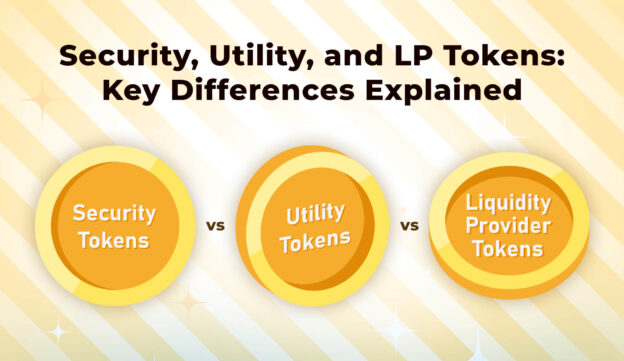
Security, Utility, and LP Tokens: Key Differences Explained

When it comes to real world assets (RWAs) on the blockchain, not all tokens are created equally. Each token type has its own distinct purpose, carries different legal implications, and may appeal to different types of users and investors. This is why it’s important to understand what defines security tokens, utility tokens, and liquidity provider (LP) tokens – the three most commonly spoke-of tokens relating to RWAs.

In this guide, we’ll explore what makes each token type unique.

Security Tokens

What they are: Security tokens are digital representations of traditional financial securities. They typically confer ownership, revenue-sharing rights, or claims to dividends or profits. These tokens are fundamentally designed to mirror traditional investment instruments but operate on blockchain infrastructure.

Use case: Investment. Security tokens are ideal for individuals looking to earn returns based on the financial performance of a business, asset, or project. They are used to tokenize real estate, equity in startups, profit-sharing contracts, and more.

Legal framework: In jurisdictions like the United States, security tokens fall squarely under existing securities laws. The SEC uses the Howey Test to determine whether a token qualifies as a security, asking whether it involves an investment of money in a common enterprise with an expectation of profit derived from the efforts of others.

Examples: Tokenized shares in private companies, fractional ownership of income-generating properties, or revenue-participation tokens.

Utility Tokens

What they are: Utility tokens provide access to a digital product, service, or ecosystem. Unlike security tokens, they are not inherently tied to financial gain or ownership rights, and they are primarily intended to be used within a specific blockchain environment.

Use case: Participation. Users buy utility tokens to access premium services, pay network fees, or interact with decentralized applications (dApps). These tokens create functional economies within ecosystems but are not designed to be investments.

Legal framework: Utility tokens generally escape classification as securities if they are used purely as a medium of exchange or for platform access. However, regulators are paying close attention to how utility tokens are marketed, if there’s any suggestion of profit potential, they may be reclassified as securities.

Examples: Ethereum (ETH), used to pay gas fees on the Ethereum network; Filecoin, used to buy decentralized storage; or platform tokens used for voting and staking within decentralized applications.

Liquidity Provider (LP) Tokens

What they are: LP tokens represent an individual’s share in a pool of assets they’ve deposited into a decentralized finance (DeFi) protocol. These tokens accrue value based on the performance of the underlying pool and can often be redeemed for the original deposit plus yield.

Use case: Indirect investment. LP tokens offer a passive way to gain exposure to asset-backed yield or appreciation. They’re widely used across DeFi platforms to incentivize liquidity and participation.

Legal framework: LP tokens operate in a regulatory grey area. While they are not shares or debt instruments, their investment-like structure means regulators may scrutinize them if they are marketed as income-generating assets. In some cases, the expectation of profit could bring them closer to the definition of a security, while in other structures this is less likely.

Examples: Uniswap LP tokens (representing a share in token swap pools), Rooster Protocol LP Tokens, Curve LP tokens, or yield-bearing vault tokens like those issued by Yearn Finance or Aave.

Relevance to Mineral Vault / Nest: Mineral Vault’s assets are included as backing and yield generators for certain products issued by Nest Credit including the nALPHA Vault. Nest is a protocol on the cutting edge RWA-focused Plume Network blockchain, and tokens received from these vaults represent an investor’s indirect claim on the value of a pool of RWAs. Although the issued tokens do not constitute equity or ownership in any specific investments held by the vault or Nest, they are designed to reflect exposure to the financial performance of those pools.

Key Differences at a Glance

FeatureSecurity TokenUtility TokenLP Token
Primary UseInvestmentAccessPool participation
Legal StatusSecurityNot usually a securityPossibly a security
RegulationHeavily regulatedLimited regulationVaries by structure
Profit ExpectationYesNoYes (typically yield-based)
Ownership RepresentationYesNoIndirect claim on pooled assets

Understanding the differences between token types isn’t just academic, it’s foundational for anyone building or investing in crypto. For builders like Nest, these distinctions shape how token products are designed, marketed, and legally structured. For investors, they influence everything from risk profile and potential returns to legal protection and compliance.

Nest’s LP tokens offer a new way to gain indirect exposure to the value of mineral assets through decentralized infrastructure. But as with any financial innovation, careful consideration must be given to the design and communication of such tokens. A token’s classification can change based on how it’s used and perceived by regulators, especially if it appears to promise passive income or capital appreciation.

As blockchain technology continues to bridge the gap between digital finance and RWAs, transparency and foresight in token issuance will be more important than ever. Clear communication, responsible design, and legal compliance are not just safeguards, they’re competitive advantages in a maturing market.

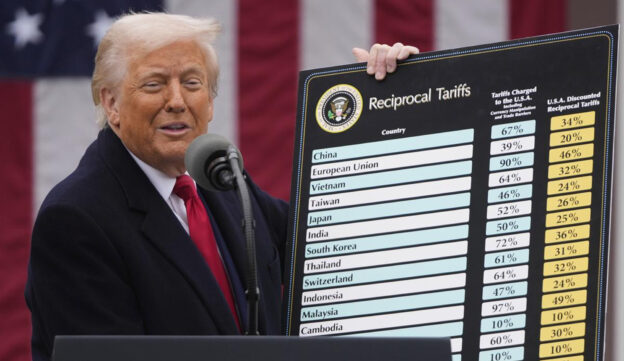
How Trump’s Tariffs Stand to Affect the Oil & Gas Industry

Trump re-entered the White House at the start of 2025 with a laser focus on trade protectionism and the reintroduction and expansion of tariffs on a variety of imports, including energy commodities. The oil and gas industry now finds itself at a crossroads shaped by these evolving trade dynamics, and while tariffs often carry the weight of short-term disruption, they also create opportunities for domestic producers, infrastructure developers and energy-focused investors.

Let’s discuss a bit about how these policies might influence the industry, recognizing that it’s important to separate near-term noise from long-term trends. There are certain fundamentals driving energy demands that remain strong, and for stakeholders who are looking forward, the road ahead may hold as much promise as it does uncertainty.

Tariffs and Their Immediate Impact

Among the most significant policy changes is the imposition of new tariffs on oil and gas imports from Canada (10%) and Mexico (25%). Together, these nations account for nearly 70% of U.S. crude oil imports. As a result, refiners – especially those in the Midwest – are facing rising input costs. Analysts predict gasoline prices could climb by up to 50 cents per gallon in some regions.

The broader slate of trade restrictions introduced by the Trump administration, those that target industrial equipment, metals and manufactured goods, have prompted concerns about global oil demand as a whole. The International Energy Agency (IEA) recently reduced its forecast for oil demand growth in 2025 by nearly a third, citing the ripple effects of escalating trade tensions. Less trade activity typically means less energy use in shipping, aviation, and manufacturing, although it’s worth noting that these forecasts often fluctuate with market sentiment.

Oilfield Services Under Pressure

One of the sectors feeling the squeeze most immediately is oilfield services. Tariffs on steel and aluminum, essential materials for drilling equipment and pipeline construction, have raised costs across the board. This coincides with a wave of investor caution, as producers temporarily scale back drilling plans in response to price volatility and higher capital expenditure.

Should crude prices dip below $60 per barrel for a sustained period – something not out of the question in a tariff-disrupted market – domestic drilling activity could contract by as much as 20%, according to analysts at major investment banks. While this may cool growth temporarily, the longer-term trajectory remains positive, particularly for firms positioned to capitalize on lower-cost domestic supply and enhanced operational efficiency.

The Silver Lining: A Boost for Domestic Energy

Though tariffs introduce friction, they also increase the appeal of homegrown energy. With foreign oil and gas facing steeper entry costs, domestic production becomes more competitive, particularly for lighter, shale-based crude. This could incentivize upstream investment and reinforce U.S. energy independence, one of the key policy goals often touted by the Trump administration.

Moreover, higher domestic demand could accelerate investment in U.S.-based infrastructure projects. Midstream operators may benefit from increased throughput as refiners shift their sourcing to American basins like the Permian and Eagle Ford. In turn, this supports job creation, local economic development, and long-term energy security.

A Catalyst for Innovation and Diversification

Periods of market disruption often spark innovation, and this moment is no different. Producers may be compelled to optimize their operations further, embracing advanced technologies to reduce costs, streamline logistics, and improve environmental stewardship; factors that align with evolving ESG expectations and investor preferences.

From an international standpoint, U.S. energy exporters could also reorient toward alternative markets in Asia, South America, and Europe, further diversifying geopolitical risk. In the long run, this may lead to more resilient trade relationships and a broader customer base for American oil and natural gas.

Strategic Outlook for Investors

The volatility sparked by tariff implementation is real, but so is the opportunity for those who understand the energy sector’s deeper currents. Investors with a long-term view can benefit from strategic positioning within the oil and gas value chain, especially in mineral rights, domestic production, and infrastructure investments.

At Mineral Vault, we see this moment not as a deterrent, but as a realignment, one that underscores the value of American energy assets and the need for dependable, domestic resources. Our approach is rooted in identifying and leveraging opportunities in stable, income-generating oil and gas investments, even amid macroeconomic shifts.

While headlines may focus on short-term friction, the structural tailwinds for domestic energy remain compelling. The resilience of U.S. producers, combined with a renewed emphasis on national self-reliance, creates fertile ground for long-term investment, and a strong case for oil and gas as a durable asset class.

Tariffs inevitably reshape market dynamics, and while they introduce challenges in the short term, they also ignite a fresh wave of opportunity. For the oil and gas industry, this environment highlights the importance of agility, infrastructure readiness, and strategic investment. Mineral Vault remains bullish, not because the road is always smooth, but because the fundamentals of energy demand and domestic value creation remain strong.

As the dust settles, one thing is clear: the next chapter of America’s energy story is being written now. And for those who know where to look, it’s a chapter rich with potential.

How Tokenization is Disrupting Traditional Finance (TradFi)

There’s a deep, seismic shift happening in the financial world. Tokenization, the term given to transforming real-world assets into digital tokens on a blockchain, challenges the long-standing paradigms of traditional finance (TradFi). We’ve previously explored what tokenization is and why it’s valuable, however this article will zone in on just how tokenization is actively disrupting financial markets. These following examples will demonstrate not just the theoretical application of tokenization, but the extremely tangible transformations already underway. 

Tokenized Government Bonds: A New Frontier

Government bonds have long been a staple of traditional financial markets, but tokenization is introducing a radical shift in how they are issued, traded, and settled. In 2023, the Hong Kong Monetary Authority (HKMA) successfully issued a tokenized green bond worth HK$800 million (approximately $102 million USD). Built on blockchain technology, this issuance reduced settlement times from the conventional T+2 (two business days) to near-instantaneous transactions. Additionally, transparency was significantly enhanced, as every transaction could be tracked in real time.

Why is this disruptive? Traditionally, bond markets rely on intermediaries such as banks and clearinghouses, which introduce costs and delays. By leveraging blockchain, tokenized bonds reduce counterparty risk, lower operational expenses, and make bond markets more accessible to a broader range of investors. This could pave the way for sovereign and corporate bonds to adopt similar tokenized models, fundamentally altering the debt markets.

Private Equity and Real Estate: Unlocking Liquidity

Private equity and real estate investments have historically been illiquid, often requiring long holding periods and high minimum investment thresholds. Tokenization changes that process by fractionalizing ownership, allowing smaller investors to participate in asset classes previously reserved for institutions and ultra-high-net-worth individuals.

For instance, in 2023, Swiss bank Sygnum tokenized shares in a private market fund, enabling fractional ownership and instant settlement on blockchain networks. Similarly, real estate developers in the U.S. and Europe have started issuing tokenized property ownership stakes, significantly lowering entry barriers for investors. A notable example is the tokenization of the St. Regis Aspen Resort, where investors could purchase digital security tokens representing ownership in the luxury property.

By introducing liquidity into traditionally illiquid markets, the market is totally disrupted by reducing capital inefficiencies and broadening investor participation. The ability to trade fractionalized ownership on blockchain-powered secondary markets could reshape how private equity and real estate investments function.

Cross-Border Payments: Reducing Friction and Costs

One of the most immediate disruptions felt in the financial sector as a result of tokenization lies in the realm of cross-border payments. International transactions are usually costly, slow, and require multiple rounds of bureaucracy through intermediaries to get settled – and settlement itself can take anywhere from hours or days to go through. Tokenized financial instruments, especially stablecoins and central bank digital currencies (CBDCs), are providing a faster, more cost-effective alternative.

For example, JPMorgan’s Onyx division has been pioneering tokenized cross-border settlements through its blockchain-based JPM Coin. Large multinational corporations are using this system to conduct instantaneous global payments, bypassing traditional correspondent banking networks. Similarly, the Bank for International Settlements (BIS) has been testing Project mBridge, a cross-border CBDC initiative aimed at reducing inefficiencies in international trade.

The disruption here is clear: by eliminating intermediaries, tokenized payments reduce fees, enhance transparency, and dramatically improve transaction speeds, making them highly attractive for businesses and financial institutions alike.

Tokenized Commodities: A Transparent Supply Chain

Commodity markets, ranging from gold and oil to agricultural products, are being reshaped by tokenization. Traditional commodity trading involves a web of brokers, warehouses, and banks, which can obscure price discovery and introduce inefficiencies. Tokenization simplifies this process by providing a transparent and immutable record of ownership and transactions.

One example is Paxos’ tokenized gold, PAXG, which represents physical gold stored in London vaults. Unlike traditional gold ETFs, which involve complex custodial arrangements, PAXG allows investors to own a claim to real gold in a highly liquid, blockchain-tradable format. Similarly, energy companies are experimenting with tokenized carbon credits and renewable energy assets, enabling more transparent and efficient trading of environmental commodities.

This disruption ensures that commodity ownership and transactions are traceable, reducing fraud risks and improving market efficiency. As adoption grows, traditional commodity markets may see a shift away from opaque trading practices toward more open and verifiable systems.

The Future of Finance is Tokenized

Tokenization is not theoretical. It does not belong in the abstract. It is an actively disruptive technology that is reshaping financial markets as we speak. It offers a myriad of benefits from increased efficiency, to reduced costs and enhanced accessibility, available through government bonds and private equities, among other avenues – and these disruptions will have long-lasting implications on the financial market. 

As regulatory frameworks continue to evolve and institutional adoption increases, the pace of tokenization’s impact will only accelerate. For financial institutions, investors, and market participants, understanding and adapting to these disruptions is no longer optional—it’s imperative.

If you’re interested in exploring more about how tokenization is transforming financial markets, check out our previous articles on the fundamentals and value proposition of tokenized assets, including our own product – the Mineral Vault token – representing a financial interest in producing oil & gas properties in the United States.

The revolution is already underway, and the opportunities that lie ahead are immense.

How Blockchain Technology Powers Tokenization

By enabling asset tokenization, blockchain technology has become one of the most disruptive technologies for the financial markets in modern history – removing middleman fees, reducing settlement times, broadening asset accessibility, and introducing enumerable other benefits. The real-world applications of tokenization stand to change modern finance forever.

In a Nutshell – What is Blockchain Technology?

In a sentence, blockchain technology is simply a decentralized digital ledger that is tamper-proof, thus removing the need for intermediaries.

There are four types of blockchains: (1) public and open to anyone (Bitcoin being the obvious example), (2) private and controlled by a single organization, (3) consortium – like private but owned by multiple organizations, and (4) hybrid, which combine the features of public and private chains. They all serve their own functions in the industry, but where they truly disrupt are via the tokenization of real-world assets like stocks, real estate, and commodities, making them vastly more accessible to a global investor base than ever before.

The Evolution of Tokenization on Blockchain

Tokenization has long been associated with Ethereum and other first-generation smart contact platforms and serves as the foundation framework for security tokens, real estate-backed tokens and digital collectibles. However, these traditional blockchains come with some challenges for real word assets (RWA) tokenization because they weren’t designed with RWA specifically in mind, making some aspects of administration unnecessarily cumbersome. Scalability, compliance and settlement inefficiencies are the chief market-adoption gremlins that have (finally) been addressed with recent *new* L1 & L2 blockchains that have been designed specifically with RWA in mind, making it vastly easier for real-world assets to be introduced into the digital economy on a scale never seen before.

Comparing RWA-Focused Chains to Traditional Blockchains

While traditional blockchains like Ethereum, Binance Smart Chain, and Solana have enabled tokenization, they exhibit several shortcomings when applied to real-world assets:

  • Regulatory Uncertainty: These blockchains lack built-in compliance tools, requiring external legal frameworks for regulated asset tokenization.
  • Transaction Speed & Fees: Ethereum’s high gas fees and congestion make it impractical for high-frequency asset transfers.
  • Fragmented Solutions: Most RWAs tokenized on traditional blockchains rely on off-chain agreements and centralized custodians, reducing the benefits of decentralization.

By contrast, Plume and similar RWA-centric chains overcome these obstacles, making them better suited for institutional investors and businesses looking to tokenize real-world assets.

Plume and the Rise of RWA-Focused Blockchains

Plume represents the next evolution of blockchain networks designed specifically for tokenizing real-world assets. Unlike general-purpose blockchains, which support a wide range of decentralized applications (dApps), Plume is an RWA-focused chain which is optimized for asset-backed tokenization, regulatory compliance, and institutional adoption.

Key Features of Plume and Other RWA-Focused Chains

  1. Built-in Compliance Mechanisms: Traditional blockchains struggle with Know Your Customer (KYC) and Anti-Money Laundering (AML) requirements. RWA-focused chains like Plume integrate whitelisting, permissioned transactions, and identity verification at the protocol level to ensure regulatory alignment.
  2. Native Asset Settlement & On-Chain Ownership: Unlike Ethereum, which requires third-party solutions for real-world asset settlements, Plume provides direct, immutable ownership records, reducing counterparty risks and enhancing transparency.
  3. Programmable Asset Control: Plume supports smart contract-based governance, allowing asset issuers to enforce transfer restrictions, automatic dividend payouts, and legal compliance measures seamlessly.
  4. Interoperability with Traditional Finance: One of the biggest challenges for early blockchain-based tokenization was the lack of integration with traditional financial systems. Plume offers on-chain bridges to banks, custodians, and fiat settlement rails, allowing institutional investors to engage with tokenized RWAs more easily.
  5. Enhanced Scalability & Lower Transaction Costs: While Ethereum remains a somewhat viable platform for tokenization, its high transaction fees and network congestion hinder large-scale RWA adoption. Plume’s architecture optimizes transaction processing for asset-backed tokenization, significantly reducing costs and increasing efficiency, all while benefitting from the fact that Plume is well-integrated with the Ethereum ecosystem.

Real-World Use Cases of RWA Tokenization

Tokenization is revolutionizing industries beyond cryptocurrency speculation, impacting real estate, commodities, fine art, and corporate debt markets. Some examples include:

  • Real Estate: Property-backed tokens allow fractional ownership, making real estate investments more accessible.  Mineral Vault is an example of a platform which gives access to cash-flowing oil & gas properties, while platforms like RealT, Landshare, and PARQStreet grant access to different forms of surface real estate investment.
  • Precious Metals & Commodities: Tokenization can be used to enhance liquidity and transparency in gold, silver, and other commodity-focused trading.
  • Stocks, Bonds, & Private Equity: RWA blockchains enable efficient issuance, transfer, and settlement of both traditional assets like stocks and bonds (wrapped in a token) as well as more complex financial investments like private equity, bridging the gap between traditional finance and decentralized finance (DeFi).

The Future of Tokenization

The rise of Plume and other RWA-focused blockchains signals a maturing tokenization industry, one that moves beyond experimental use cases into full-scale adoption by institutional players. As compliance, efficiency, and scalability challenges are addressed, the global financial system is likely to integrate tokenized RWAs into mainstream markets – as Blackstone has already begun to do.

For businesses and investors, the ability to digitize and trade real-world assets seamlessly presents immense opportunities. With platforms like Mineral Vault leveraging these advanced blockchain solutions, tokenization is set to reshape asset ownership and investment structures worldwide.