
Author Archives: Blake Morgan

The Future of Energy Investing: Why Tokenized Royalties Will Reshape Global Portfolios in 2026

As 2025 comes to a close, one thing has become clear across financial markets: real-world assets (RWAs) are no longer a niche experiment. They are becoming a foundational component of the digital economy — and energy assets, specifically U.S. oil & gas royalties, are emerging as one of the most compelling sectors within this new landscape.

For decades, mineral and royalty interests were accessible only to insiders with specialized knowledge, patience for administrative complexity, and substantial capital. Today, that gate is opening. Tokenization is transforming historically fragmented, paper-based assets into programmable, auditable financial instruments that can be accessed globally.

As we look toward 2026, here’s why we believe tokenized energy royalties are set to reshape investor portfolios worldwide — and how Mineral Vault is leading that shift.


1. Yield Is King — and Energy Royalties Deliver It Reliably

For years, global investors chased yield in low-rate environments. Now, with interest rates expected to ease and traditional income assets repricing, attention is shifting back to stable, real-asset-backed yield.

Mineral and royalty interests are uniquely positioned:

  • They generate monthly cash flow.

  • They are inflation-protected because hydrocarbons sell at spot commodity prices.

  • They carry no operating costs for the royalty owner.

  • They often produce income for multiple decades.

In an era defined by macro uncertainty, tokenized royalties offer something rare: predictable yield from a physical economic activity — American energy production.


2. Tokenization Is Moving From Idea to Infrastructure

2025 marked the transition from experimentation to execution. Tokenization platforms, custodians, and L1/L2 ecosystems matured dramatically. Plume Network, which Mineral Vault leverages for token issuance and yield distribution, represents this shift — infrastructure purpose-built for RWAs rather than retrofitted for them.

As RWA-native chains scale, we expect 2026 to bring:

  • Instant secondary liquidity for historically illiquid assets

  • Smarter compliance primitives that preserve global accessibility

  • Unified yield markets where tokenized energy, real estate, and credit coexist

  • Institutional on-ramps that normalize digital ownership of private assets

Energy royalties, with their steady cash flow and clean legal structure, fit this world perfectly.


3. Global Investors Want Access to U.S. Energy — But Haven’t Had It
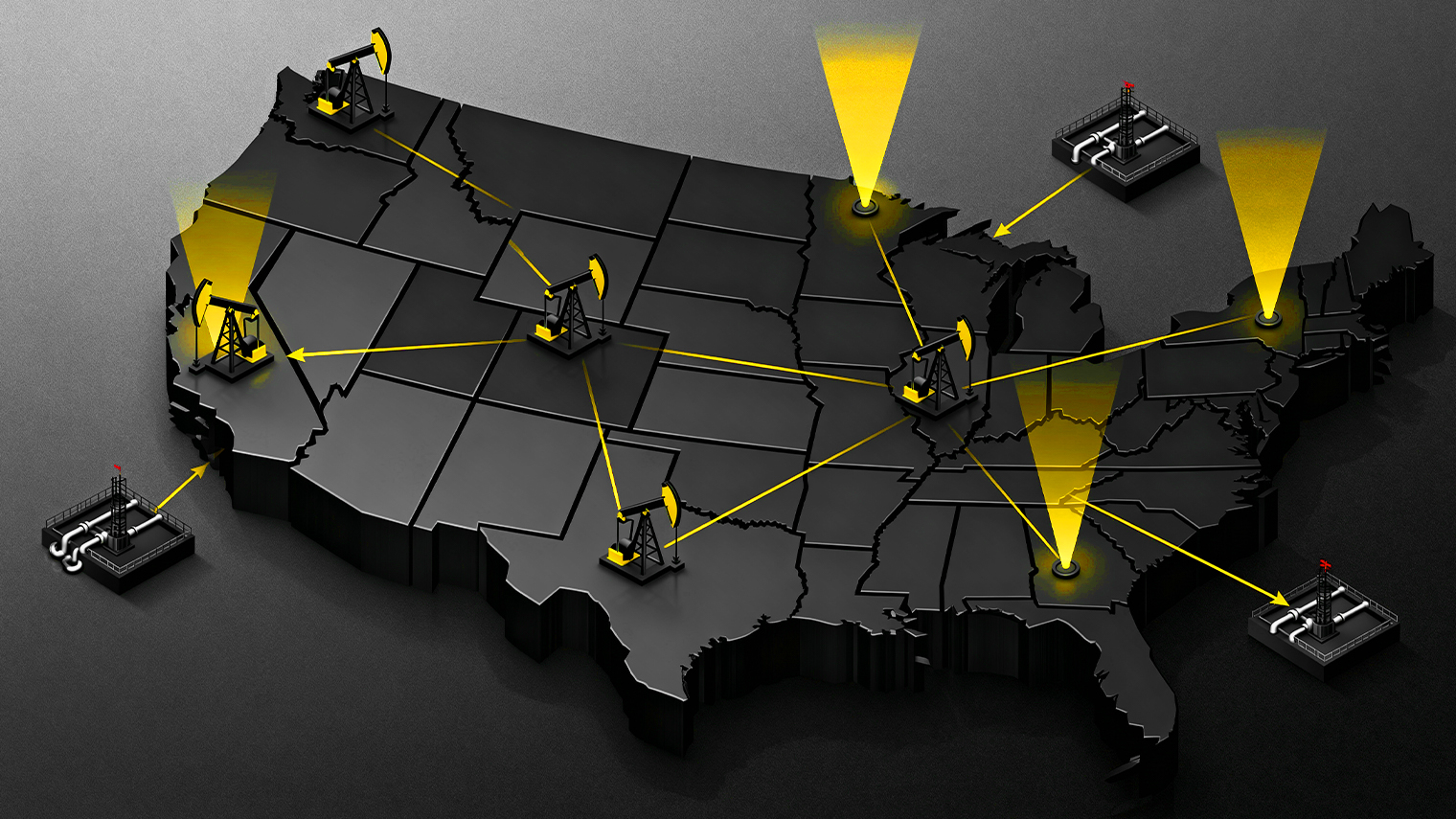
The United States is the world’s largest producer of both oil and natural gas. Yet for international investors, gaining exposure to U.S. mineral interests has historically been nearly impossible due to:

  • Title verification challenges

  • Administrative complexity

  • High minimum investments

  • Jurisdictional barriers

  • Illiquidity

Tokenization removes these barriers in a single stroke. Today, an investor in Singapore, Brazil, or Europe can access U.S. energy royalty cash flow through a compliant, digital instrument that automates:

  • Ownership

  • Cash distribution

  • Documentation

  • Record-keeping

This is unprecedented — and demand is rising fast.


4. Portfolio Construction Is Being Redefined

Investors increasingly want assets that behave differently from traditional stocks and bonds.
Portfolios of oil & gas royalties like Mineral Vault I provide:

  • Zero correlation to equities

  • Zero correlation to credit spreads

  • Direct participation in energy production

  • Monthly off-chain → on-chain conversions of real cash flow

  • Geographic and operator diversification across thousands of wells

As global allocators reassess risk frameworks for 2026, real-asset income — especially programmable income — will become a larger share of modern portfolios.


5. 2026 Will Mark the Rise of Tokenized Cash Flow Products

Most RWAs today are tokenized claims or representations of traditional assets. Tokenized royalties are different — they are native cash-flowing assets, generating monthly yield with no intermediary conversion needed.

This positions them for:

  • Vault integrations

  • Yield-bearing DeFi primitives

  • Structured products

  • Collateralization

  • Instant composability

In other words, tokenized energy royalties aren’t just assets — they are building blocks for entirely new financial products.

Tokenized real-world yield is the next frontier, and energy royalties are poised to sit at the center of it.


6. Mineral Vault’s Role in the Next Wave

Mineral Vault I validated something powerful:
that private energy assets can be aggregated, de-risked, tokenized, and distributed globally — while generating healthy, transparent monthly income.

Mineral Vault I spans properties including:

  • 2,500+ producing wells

  • 10,000+ gross acres

  • 150+ operators

  • 9 U.S. states

  • Diverse commodity exposure (crude oil, natural gas, et al)

  • Automated USDC yield

…and the model is no longer theoretical. It works — at scale.

As we prepare for Mineral Vault II and additional offerings in 2026 and beyond, our focus is clear:
expand access, deepen diversification, and continue building the world’s premier marketplace for tokenized oil & gas properties.


Closing Thought: A New Financial Era Is Beginning

2024 was the year RWAs gained attention.
2025 was the year infrastructure matured.
2026 will be the year real cash-flowing assets dominate on-chain finance.

Energy royalties — stable, inflation-protected, and operationally passive — are uniquely suited to lead that shift.

By bridging the physical production of American energy with the precision of blockchain finance, Mineral Vault is not just observing the future of investing — We are building it.
How Does US Oil & Gas Production Compare to Other Countries?

The global production of oil and petroleum liquids is estimated to have reached an average of 103 million barrels per day in 2024. That’s an increase of approximately 900,000 for the year, which is a relatively modest year-over-year increase, owing mostly to a slowdown in China’s economic growth.

While America is the global leader in both oil and gas production, several other nations are major producers, with large multinational companies driving extraction. This article will discuss the top oil and gas-producing nations, and their production compared to America’s.


The Top 5 Oil-Producing Nations In The World 


1) America


America is the world’s largest oil-producing country, with an output of 21.91 million barrels per day in 2023. This is double the output of the next largest oil-producing nation. America is also the top producer of lease condensate and crude oil, with Texas being the country’s largest oil-producing state.

America is often described as a swing producer for its production fluctuations alongside market prices.

America is also a major oil consumer. In 2023, it consumed an average of 20.5 million barrels per day of petroleum products.


2) Saudi Arabia


In 2023, Saudi Arabia produced 11.1 million oil barrels per day, making it the second-largest producer in the world. As a major OPEC member, Saudi Arabia is also the world’s largest petroleum exporter. It is home to 17% of the world’s proven petroleum reserves.

The Saudi economy is heavily reliant on its petroleum sector. It accounts for roughly 42% of its GDP, 87% of budget revenues, and 90% of its export earnings.


3) Russia


Despite economic sanctions and trade restrictions imposed on it since its invasion of Ukraine, Russia remains one of the world’s top oil producers. In 2023, it produced 10.75 million barrels of oil daily, around 11% of the global total.

Most of Russia’s reserves are between West Siberia’s Central Siberian Plateau and the Ural Mountains. Russia has responded to export bans from countries like the US, UK, and Canada by meeting heavy demand from China and India.


4) Canada


Canada is fourth, producing 5.7 million barrels per day in 2023, 6% of the global share. Much of its oil production comes from the oil sands of Alberta, Atlantic offshore fields, and the Western Canada Sedimentary Basin.

The majority of Canadian energy exports are to America. In 2023, 60% of American crude imports originated from Canada, a 27% increase compared to 2013.


5) China


China is the fifth-largest oil producer, responsible for 5.26 million barrels per day in 2023, around 5% of total production.

The northeast and north-central regions supply most Chinese domestic production. Mature fields such as Daqing have been heavily drilled for oil for many decades, so companies are heavily investing in enhanced oil recovery techniques, including polymer, stream flooding, and water injection, to offset some of the production declines.

Additionally, China is now the second largest consumer behind the US.


The Top 5 Natural Gas-Producing Nations In The World 


1) America


America leads global natural gas production, producing 1.35 trillion cubic meters, nearly a quarter of total production in 2023. It accounts for 25% of global production. This output has increased by over 350 billion cubic meters in the past decade, largely due to increasing coal costs and advancements in fracking technologies.

It’s also the largest consumer of natural gas, with demand totalling 886.5 billion cubic meters in 2023. Most of this demand was for home heating and electricity generation. Appalachia leads production, contributing 29% of total output.


2) Russia


Russia is the second-largest exporter and producer of natural gas, at 586.4 billion cubic meters in 2023. It boasts the world’s largest known natural gas reserves. Gazprom, the state-owned energy group, is reported to hold a 16.3 percent share of global natural gas reserves.

European rejection of natural gas following its invasion of Ukraine led to a 41% decrease in revenues in the first three quarters of 2023.


3) Iran


Iran is third, producing 251.7 billion cubic meters. It also has the second-largest natural gas reserves (shared with Qatar), but its infrastructure severely lags behind America’s and Russia’s.

Iran’s production has tripled in the past decade, making it the Middle East’s largest producer. With a US $80 billion investment in its gas fields, Iran plans to boost its production capacity by 30% within five years.


4) China


In 2023, China produced 234.3 billion cubic meters of natural gas, which has grown by 92.3% since 2013, largely thanks to government incentives to transition away from coal to reduce air pollution and meet emissions targets.

However, China still relies on imports from Australia, Turkmenistan, America, Malaysia, and Russia to meet half of its demand. Shale, coal-bed methane, and natural gas hydrates are among the unconventional gas sources that account for 43% of China’s total output.


5) Canada


Canada has a proven natural gas reserve of 83 trillion cubic feet and produced 190.3 billion cubic meters in 2023. The Western Canadian Sedimentary Basin is the primary source of Canadian gas production, and significant offshore fields are located near Newfoundland and Nova Scotia.


Looking Forward…

For the next decade, America is near-certain to continue leading oil and natural gas production given the strength of its current lead. However, Russia, China, and Saudi Arabia, in particular, will continue to be extremely significant and influential players in global energy supply.

If you’re interested to participate in the movement to tokenize investment in U.S. oil and gas properties, democratizing and globalizing access to these historically inaccessible investment properties, then check out the latest token offering on our home page or read more on our blog.